
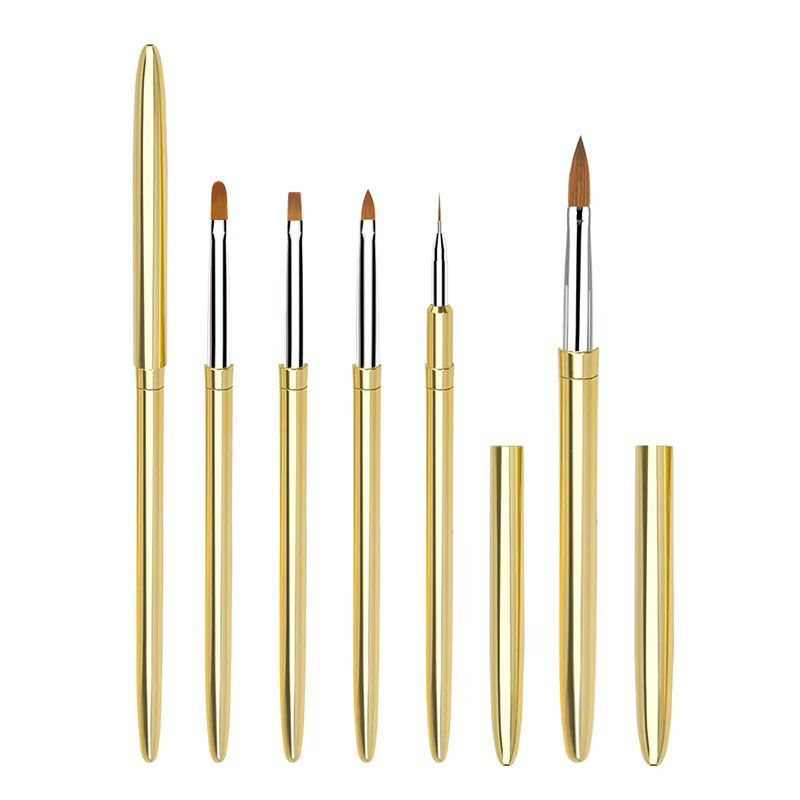
Liner Brush vs Detail Brush: What’s the Difference and Which One Should You Choose?
Introduction
When it comes to nail art, choosing the right brush can make a huge difference in the final result. Two of the most commonly used brushes are the liner brush and the detail brush.
However, many beginners — and even experienced nail technicians — often confuse these two tools.
In this guide, we will break down the differences between liner brushes and detail brushes, explain their specific uses, and help you choose the right one for your nail designs.
What Is a Liner Brush?
A liner brush (also known as a striping brush) features long, thin bristles designed for creating smooth, continuous lines.
Key Features:
- Long bristles (usually 5mm–20mm)
- Thin and flexible tip
- Holds more gel or polish
Best Uses:
- Long lines
- French tips
- Swirls and curves
- Outline designs
👉 Liner brushes are essential for precision line work and are widely used in professional nail salons.
What Is a Detail Brush?
A detail brush has shorter bristles and a finer tip, making it ideal for intricate and controlled designs.
Key Features:
- Short bristles (usually 3mm–7mm)
- More control and stiffness
- Less product retention
Best Uses:
- Small patterns
- Flowers and leaves
- Fine detailing
- 3D nail art
👉 Detail brushes are perfect for micro-level design work where accuracy matters most.
Liner Brush vs Detail Brush: Key Differences
| Feature | Liner Brush | Detail Brush |
| Bristle Length | Long | Short |
| Flexibility | High | Medium |
| Control | Moderate | High |
| Best For | Lines & curves | Small details |
| Product Holding | More | Less |
Which Brush Should You Choose?
The answer depends on your nail art needs.
Choose a Liner Brush if:
- You create long lines or patterns
- You do French tips frequently
- You want smooth, continuous strokes
Choose a Detail Brush if:
- You focus on intricate designs
- You need high precision
- You work on small nail areas
Pro Tip: Most Professionals Use Both
In professional nail art, these two brushes are not alternatives — they are complementary tools.
A typical workflow looks like this:
- Use a liner brush for outlines
- Use a detail brush for filling and refining
👉 This combination delivers the best results.
Common Mistakes to Avoid
❌ Using a liner brush for tiny details
❌ Using a detail brush for long lines
❌ Choosing low-quality bristles that lose shape
❌ Not cleaning brushes properly
These mistakes can reduce precision and affect the final design quality.
How to Choose a High-Quality Nail Brush
When buying liner or detail brushes, pay attention to:
- Bristle material (nylon or Kolinsky hair)
- Tip sharpness and shape retention
- Handle balance and comfort
- Durability after cleaning
High-quality brushes not only improve performance but also last longer.
Conclusion
Understanding the difference between liner brushes and detail brushes is essential for improving your nail art skills.
- Liner brushes are perfect for long, flowing lines
- Detail brushes are ideal for precision and intricate designs
For the best results, professionals recommend using both brushes together.
Looking for a reliable nail brush supplier?
We specialize in manufacturing high-quality liner and detail nail brushes for brands, distributors, and salons across Europe and the US.
✔ Custom design (OEM/ODM)
✔ Low MOQ
✔ Stable quality & fast delivery
👉 Contact us today to get samples and start your custom nail brush project.
👉 Looking for a reliable nail brush manufacturer? We provide OEM & private label services with low MOQ and fast delivery.
👉 If You Want To Know How to Choose the Right Nail Art Brush for Beginners and Professionals contact us today