
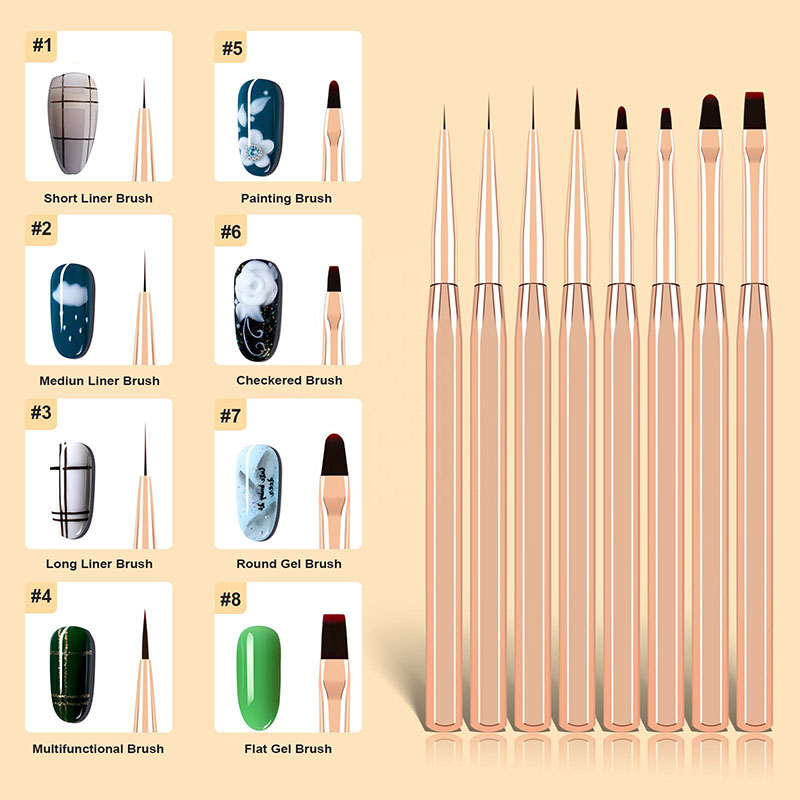
Why Do Nail Brushes Shed Hair? Causes & Solutions
Why do nail brushes shed hair?
Nail brushes usually shed hair because of poor bristle quality, weak bristle-to-ferrule bonding, inconsistent assembly, excessive mechanical stress, incorrect cleaning, or improper storage.
For professional and B2B nail brushes, shedding is often a quality-control issue rather than simply a result of normal use. A well-made brush should maintain secure bristle retention during normal application, cleaning, and storage.
For buyers sourcing nail brushes in bulk, the key factors to evaluate include bristle quality, bonding strength, ferrule construction, assembly consistency, shedding tests, and cleaning compatibility.
Key Takeaways
- Nail brush shedding can come from both manufacturing defects and improper use.
- Weak bonding between the bristles and ferrule is one important manufacturing-related cause.
- Low-quality or inconsistent bristles can increase the risk of loose fibers.
- Excessive pressure, aggressive cleaning, and poor storage can accelerate shedding.
- Natural and synthetic bristles can have different durability and maintenance requirements.
- B2B buyers should test samples before placing large production orders.
- Manufacturers should include shedding inspection and pull testing in their quality-control process.
Table of Contents
- Why Do Nail Brushes Shed Hair?
- Poor Bristle Quality
- Weak Bristle-to-Ferrule Bonding
- Poor Brush Assembly
- Excessive Trimming or Processing
- Incorrect Cleaning
- Excessive Pressure During Use
- Heat, Solvents, and Improper Storage
- Natural vs Synthetic Nail Brush Shedding
- How to Test Nail Brushes for Shedding
- How Manufacturers Control Nail Brush Shedding
- B2B Nail Brush Quality Inspection Checklist
- How to Choose a Nail Brush Manufacturer
- Frequently Asked Questions
- Conclusion
1. Why Do Nail Brushes Shed Hair?
A nail brush is made from several components that work together, including the bristles, ferrule, adhesive or bonding system, handle, and sometimes a cap or protective sleeve.
When individual bristles fall out during normal use, the problem can originate from any part of this construction.
The most common causes include:
- Low-quality or inconsistent bristle material
- Weak bonding between the bristles and ferrule
- Inconsistent brush assembly
- Excessive trimming or mechanical processing
- Incorrect cleaning methods
- Excessive pressure during application
- Exposure to unsuitable chemicals or heat
- Poor storage and handling
For an individual nail artist, one loose hair may seem like a minor problem. For a brand, salon chain, distributor, or retailer purchasing hundreds or thousands of brushes, however, repeated shedding can become a significant quality issue.
A loose fiber can affect application precision, product appearance, customer experience, and ultimately the perceived quality of the brand.
2. Poor Bristle Quality
One of the first factors to consider is the quality and consistency of the bristle material.
Nail brushes may use different types of natural or synthetic fibers. Their performance depends not only on the material itself but also on fiber selection, processing, length consistency, diameter, flexibility, and surface characteristics.
Low-quality fibers may be more likely to:
- Break during use
- Become loose during cleaning
- Lose their original shape
- Develop uneven tips
- Produce inconsistent brush performance
However, it is important to distinguish bristle breakage from bristle shedding.
Bristle breakage
A fiber breaks somewhere along its length, leaving part of the fiber inside the brush.
Bristle shedding
A complete fiber or fiber bundle becomes detached from the brush structure.
These problems can have different causes and should not automatically be treated as the same manufacturing defect.
For B2B buyers, a supplier should be able to explain what type of bristle is being used and how the material is processed and secured during manufacturing.
3. Weak Bristle-to-Ferrule Bonding
For many nail brushes, the ferrule is the component that connects the bristle bundle to the handle.
If the bonding between the bristles and ferrule is inadequate, fibers can gradually become loose during repeated use.
Possible contributing factors include:
- Insufficient adhesive
- Inconsistent adhesive application
- Poor curing or drying conditions
- Contamination during assembly
- Incorrect bonding process
- Poor compatibility between materials
The problem may not always be visible during a simple visual inspection.
A brush can look perfectly normal when new but begin losing fibers after repeated application and cleaning.
Why bonding quality matters for B2B buyers
When purchasing private-label nail brushes, buyers should not evaluate quality based only on appearance.
A professional sample should ideally be tested for:
- Bristle retention
- Shape retention
- Pull resistance
- Repeated-use durability
- Cleaning compatibility
- Ferrule stability
This is particularly important for professional gel, acrylic, liner, and detail brushes, which may experience repeated cleaning and manipulation.
4. Poor Brush Assembly
Even good-quality bristles can perform poorly if the brush is not assembled correctly.
Manufacturing consistency matters because a nail brush contains multiple components that must work together.
During assembly, manufacturers need to control factors such as:
- Bristle bundle formation
- Bristle positioning
- Ferrule insertion
- Adhesive application
- Handle connection
- Tip shaping
- Final inspection
If assembly tolerances vary significantly between units, one brush may perform well while another brush from the same batch may shed prematurely.
This is especially important for B2B orders.
A buyer purchasing 50 samples may receive products that look excellent, but the real test is whether the same quality can be maintained across hundreds or thousands of units.
That is why production consistency is just as important as the performance of an individual sample.
5. Excessive Trimming or Processing
Nail brush bristles are often shaped and processed to achieve a particular profile.
For example, different brushes may require:
- Fine pointed tips
- Flat edges
- Rounded profiles
- Long liner shapes
- Short detail shapes
- Wide gel application shapes
During this process, excessive mechanical treatment can affect individual fibers.
Aggressive trimming or repeated processing may contribute to:
- Uneven bristle tips
- Weak individual fibers
- Reduced shape retention
- Loose fibers around the brush edge
This does not mean that every trimmed brush will shed.
Instead, the important factor is how the bristles are processed and controlled during manufacturing.
For premium nail brushes, the final shaping process should be designed to achieve the required brush profile without unnecessarily compromising fiber integrity.
6. Incorrect Cleaning
Cleaning is essential for professional nail brushes, but the wrong cleaning method can shorten brush life.
Different nail products and brush materials may require different cleaning procedures.
Problems can occur when users:
- Leave brushes submerged for too long
- Use an unsuitable solvent
- Scrub the bristles aggressively
- Pull hardened product from the brush
- Bend the bristles repeatedly during cleaning
- Apply excessive mechanical force
The correct cleaning method depends on the product being removed, the bristle material, the bonding system, and the manufacturer’s instructions.
Therefore, buyers should not assume that one cleaning solution is appropriate for every nail brush.
For example, a brush designed for gel application may require a different maintenance approach from a brush used with another nail product.
For professional users, it is better to use the least aggressive effective cleaning method and follow the brush manufacturer’s care recommendations.
7. Excessive Pressure During Use
Not every shedding problem originates from the manufacturer.
A nail brush is a precision tool, and excessive pressure can mechanically stress the bristles.
For example, repeatedly pressing the brush hard against the nail surface can:
- Bend the bristles excessively
- Distort the brush shape
- Increase friction
- Stress the ferrule area
- Accelerate fiber damage
Long, fine liner brushes are particularly sensitive to excessive mechanical force because their structure is designed for controlled precision rather than heavy pressure.
Professional nail artists generally use controlled brush pressure according to the application technique.
For B2B buyers, this is another reason why sample testing should reflect real-world use rather than a simple visual inspection.
8. Heat, Solvents, and Improper Storage
Environmental conditions can also affect nail brush durability.
High temperatures, unsuitable chemicals, moisture, and poor storage conditions may affect different parts of the brush.
For example, inappropriate storage may cause:
- Bristle deformation
- Tip damage
- Fiber contamination
- Handle damage
- Reduced brush shape retention
Protective caps can be useful for some professional nail brushes because they reduce contact between the bristles and other objects during transportation and storage.
However, brushes should still be stored according to the manufacturer’s recommendations.
Avoid unnecessary exposure
If a brush is not designed for prolonged exposure to a particular solvent, repeated exposure may gradually affect the bristles or bonding system.
Therefore, a B2B buyer should ask the manufacturer: Which cleaning products and storage conditions are recommended for this brush?
This simple question can help prevent avoidable quality complaints after the product reaches the market.
9. Natural vs Synthetic Nail Brush Shedding
Both natural and synthetic nail brushes can provide professional performance, but their characteristics are different.
| Feature | Natural Hair Brushes | Synthetic Brushes |
|---|---|---|
| Material | Natural animal hair | Man-made fibers |
| Fiber characteristics | Naturally variable | Highly controllable |
| Tip characteristics | Can provide very fine tips | Can be engineered for consistency |
| Customization | Depends on available hair | Wide range of specifications |
| Cleaning requirements | Material dependent | Material dependent |
| Consistency | Can vary by grade | Generally easier to standardize |
| Common applications | Professional precision work | Gel, nail art, liner, detail and other applications |
A common misconception is that synthetic brushes automatically shed less than natural brushes, or that natural brushes automatically shed more.
The actual result depends heavily on:
- Material quality
- Fiber preparation
- Bundle construction
- Bonding
- Ferrule design
- Assembly
- Quality control
- User handling
Therefore, material alone should not be used to judge shedding performance.
10. How to Test Nail Brushes for Shedding
For B2B buyers, testing before mass production is one of the most effective ways to identify potential problems.
A basic nail brush quality test can include several stages.
Step 1: Visual inspection
Check the brush under good lighting.
Look for:
- Loose fibers
- Uneven tips
- Gaps in the bristle bundle
- Excess adhesive
- Uneven ferrules
- Handle defects
Step 2: Gentle fiber movement test
Gently manipulate the bristles without excessive force.
Check whether individual fibers or bundles appear loose.
This should be a controlled inspection rather than aggressive pulling.
Step 3: Application test
Use the brush for its intended application.
For example:
- Gel brush → gel application
- Liner brush → fine lines
- Detail brush → detailed nail art
- Acrylic brush → acrylic application
The objective is to evaluate the brush under realistic conditions.
Step 4: Cleaning test
Clean the brush using the recommended method.
Then inspect the brush again.
Check for:
- Loose fibers
- Shape deformation
- Tip damage
- Ferrule movement
- Changes in flexibility
Step 5: Repeat-use testing
For larger B2B projects, repeated-use testing provides more useful information than testing a new brush only once.
A buyer can establish a standardized internal test protocol based on the intended application and cleaning process.
11. How Manufacturers Control Nail Brush Shedding
A reliable nail brush manufacturer should control shedding at several stages rather than relying only on final inspection.
A typical quality-control process can include:
Incoming material inspection
Check the consistency and condition of the bristle material before production.
Bristle preparation
Control fiber length, arrangement, and bundle formation according to the product specification.
Bonding control
Maintain consistent bonding conditions between the bristle bundle and ferrule.
Assembly inspection
Check ferrule, handle, bristle alignment, and overall construction.
Shape inspection
Verify that the final brush profile matches the approved sample.
Shedding inspection
Inspect finished brushes for loose fibers before packing.
Sample retention
For customized B2B orders, retaining approved samples can help manufacturers compare future production batches against the original specification.
This is particularly useful for private-label products because consistency matters across repeated orders.
12. B2B Nail Brush Quality Inspection Checklist
If you are sourcing nail brushes for a brand, salon, distributor, or e-commerce business, consider checking the following:
| Quality Factor | What Buyers Should Check |
|---|---|
| Bristle material | Is the specified material actually used? |
| Fiber consistency | Are fibers consistent in length and quality? |
| Bristle retention | Do fibers remain securely attached? |
| Ferrule | Is it stable and properly assembled? |
| Bonding | Is the bristle bundle securely fixed? |
| Shape | Does the brush match the approved sample? |
| Tip | Is the tip clean and consistent? |
| Handle | Is the handle securely connected? |
| Cleaning | Does the brush tolerate the intended maintenance method? |
| Packaging | Does packaging protect the bristles during transport? |
| Batch consistency | Does mass production match the approved sample? |
For private-label products, buyers should also verify:
- Logo placement
- Logo durability
- Handle color
- Ferrule color
- Brush dimensions
- Packaging specifications
- Individual packaging
- Barcode or labeling requirements where applicable
13. How to Choose a Nail Brush Manufacturer
If nail brush shedding is an important concern, do not select a supplier based only on the lowest unit price.
Instead, evaluate the manufacturer’s ability to control the complete production process.
Ask potential suppliers:
1. What bristle materials do you offer?
Ask for clear specifications rather than relying only on descriptions such as “premium” or “professional.”
2. How do you control bristle shedding?
A capable manufacturer should be able to explain its inspection and production process.
3. Can you provide samples before bulk production?
Samples allow you to evaluate the actual product before committing to a larger order.
4. Can you maintain consistency between samples and mass production?
This is particularly important for private-label products.
5. Can you customize the brush?
Depending on your product positioning, customization may include:
- Bristle type
- Brush shape
- Brush length
- Handle color
- Ferrule finish
- Logo
- Cap
- Packaging
6. Can you provide a quality specification?
A written specification helps both buyer and manufacturer establish the same quality expectations.
For B2B sourcing, clear specifications and documented quality requirements are usually more useful than simply asking whether a brush is “high quality.”
14. Frequently Asked Questions
Why do nail brushes shed hair?
Nail brushes can shed because of poor bristle quality, weak bonding, inconsistent assembly, excessive mechanical stress, unsuitable cleaning, or improper storage.
Is nail brush shedding normal?
A small amount of fiber loss can occur depending on the brush material and use, but significant or repeated shedding during normal use can indicate a quality or maintenance problem.
Do expensive nail brushes shed less?
Price alone does not determine shedding performance. Material quality, construction, bonding, assembly, and quality control are all important factors.
Do synthetic nail brushes shed?
Synthetic brushes can shed if the fibers are poorly secured or the brush is damaged. Synthetic material itself does not guarantee zero shedding.
Do Kolinsky nail brushes shed?
Kolinsky brushes can lose hairs if the brush is damaged, improperly cleaned, poorly constructed, or subjected to excessive mechanical stress. Proper construction and maintenance are important.
How can I prevent nail brush shedding?
Use the brush according to its intended application, avoid excessive pressure, follow the manufacturer’s cleaning instructions, and store the brush in a way that protects the bristles.
How should nail brush manufacturers test shedding?
Manufacturers can combine visual inspection, controlled fiber-retention checks, application testing, cleaning testing, and batch inspection according to the product specification.
Should I test nail brush samples before placing a bulk order?
Yes. For B2B purchases, sample testing allows buyers to evaluate bristle retention, shape, application performance, cleaning compatibility, packaging, and overall consistency before mass production.
What should I ask a nail brush supplier about shedding?
Ask about bristle material, bonding, ferrule construction, quality-control procedures, sample testing, production consistency, and recommended cleaning methods.
15. Conclusion
Nail brush shedding can result from several different factors, and it should not automatically be attributed to the bristle material itself.
The main factors include bristle quality, bonding strength, brush assembly, processing, cleaning, mechanical stress, storage, and overall manufacturing quality control.
For individual nail artists, proper use and maintenance can help extend brush life. For brands, salons, distributors, and e-commerce sellers, however, the issue should be evaluated from a broader B2B quality perspective.
Before placing a large order, test representative samples and establish clear specifications for:
- Bristle material
- Brush dimensions
- Shape
- Ferrule
- Handle
- Logo
- Bonding
- Shedding performance
- Cleaning requirements
- Packaging
- Batch consistency
A reliable nail brush manufacturer should be able to discuss these specifications clearly and explain how quality is controlled throughout production.
Looking for Custom Nail Brushes for Your Brand?
Yana Cosmetic provides customized nail brush solutions for brands, nail salons, distributors, and beauty businesses, including gel brushes, acrylic brushes, liner brushes, detail brushes, French brushes, and custom nail brush sets.
Customization can include bristle material, brush shape, handle color, ferrule finish, logo, caps, and private-label packaging, depending on the product requirements.
If you are developing a new nail brush collection or looking for a long-term OEM/private-label supplier, contact Yana Cosmetic to discuss your specifications, samples, and production requirements.