
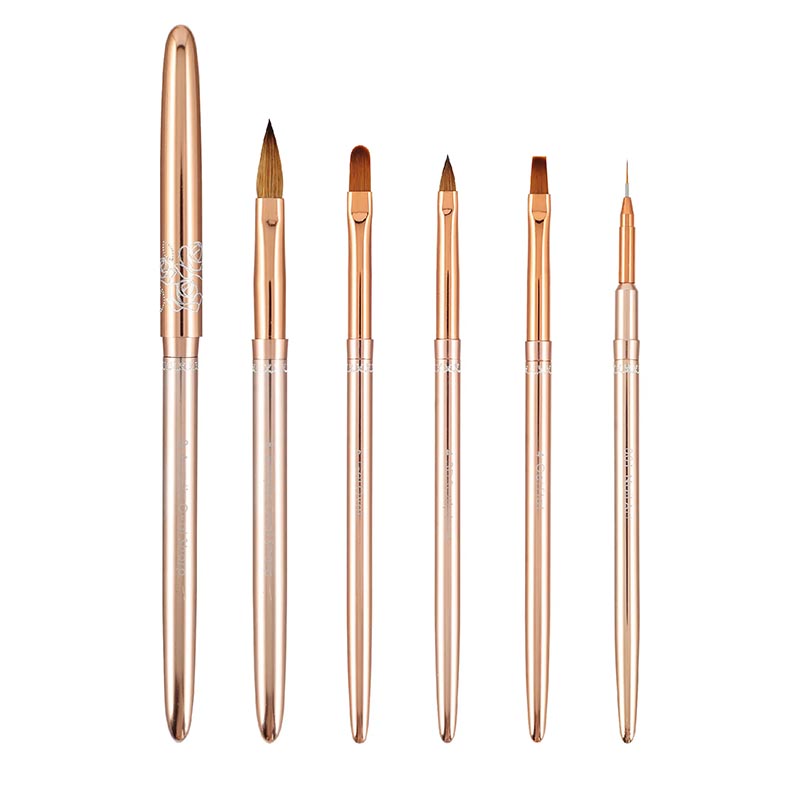
Can You Use Alcohol to Clean Nail Brushes?
Yes, alcohol can be used to clean some nail brushes, but it should not automatically be the first choice for every brush or every type of nail product.
The correct cleaning method depends on the type of brush, the product used with it, the bristle material, and how often the brush is cleaned.
For professional nail technicians, improper cleaning can cause bristles to become dry, stiff, distorted, or separated over time.
This guide explains when you can use alcohol to clean nail brushes, when you should avoid it, and how to clean gel and nail art brushes while protecting their shape and performance.
Quick Answer: Is Alcohol Safe for Nail Brushes?
Alcohol can be useful for removing certain residues from nail brushes, particularly when working with gel products. However, frequent or prolonged exposure may affect some bristle materials, coatings, adhesives, or brush components.
For regular nail brush maintenance, use the least aggressive cleaning method that effectively removes the product.
The general approach is:
- Remove excess product immediately.
- Use an appropriate brush cleaner or compatible cleaning solution.
- Avoid unnecessary soaking.
- Reshape the bristles after cleaning.
- Store the brush properly with the tip protected.
What Happens When You Clean Nail Brushes With Alcohol?
Alcohol is a solvent that can help dissolve or remove certain cosmetic residues.
However, cleaning a nail brush involves more than simply removing visible product.
Repeated exposure may affect:
- Bristle flexibility
- Bristle shape
- Adhesive bonding
- Handle coatings
- Ferrule finishes
The risk depends heavily on the type of brush and cleaning method.
For this reason, professional users should avoid treating every nail brush in exactly the same way.
Can You Use Alcohol to Clean Gel Nail Brushes?
Yes, alcohol may be used in some gel brush cleaning situations, but it should be used carefully.
Gel brushes are particularly sensitive to improper cleaning because their performance depends on maintaining:
- A controlled belly
- A smooth tip
- Consistent flexibility
- Proper shape retention
After removing the majority of the gel, clean the brush according to the manufacturer’s recommended method.
Avoid leaving the brush submerged in alcohol for extended periods.
Best Practice for Gel Brushes
A safer routine is:
Wipe → Clean → Reshape → Dry → Store
rather than:
Soak → Scrub → Leave exposed
This simple difference can help extend the working life of a professional gel brush.
How to Clean Nail Brushes With Alcohol Step by Step
If alcohol is appropriate for your specific brush and product, follow these steps.
Step 1: Remove Excess Product
Do not immediately place a brush covered with a large amount of gel or acrylic product into cleaning liquid.
First remove as much excess material as possible.
Use a lint-free wipe or another compatible method recommended for the product.
Step 2: Apply a Small Amount of Cleaning Solution
Use enough solution to clean the bristles without unnecessarily soaking the entire brush.
Focus on the working area of the brush.
Avoid allowing liquid to accumulate around the ferrule.
Step 3: Gently Work Through the Bristles
Move the brush gently through the cleaning solution.
Do not aggressively bend or scrub the bristles.
Excessive mechanical force can permanently change the shape of fine nail art brushes.
Step 4: Remove Residue
Use a clean lint-free material to remove remaining residue.
Repeat the process if necessary rather than applying excessive force.
Step 5: Reshape the Brush
This step is often overlooked.
After cleaning, gently reshape the brush into its original working profile.
For example:
- Liner brushes should retain a fine point.
- Detail brushes should maintain their controlled tip.
- Flat brushes should retain their flat edge.
- Oval brushes should retain their rounded profile.
Step 6: Allow the Brush to Dry
Allow the brush to dry properly before storage.
Do not immediately close a wet brush inside an airtight container unless the manufacturer’s instructions specifically recommend it.
Alcohol vs Nail Brush Cleaner
Which is better: alcohol or a dedicated nail brush cleaner?
There is no universal answer.
The correct choice depends on the brush material and the product being removed.
| Cleaning Method | Main Advantage | Potential Concern |
|---|---|---|
| Alcohol | Convenient and widely available | May be too aggressive for frequent use |
| Dedicated Brush Cleaner | Designed for brush maintenance | Product compatibility varies |
| Recommended Manufacturer Cleaner | Usually best matched to the brush | May not always be available |
| Mechanical Wiping | Minimizes liquid exposure | May not remove all residue |
For expensive professional brushes, following the brush manufacturer’s care instructions is generally the safest approach.
How to Clean Gel Nail Brushes Without Damage
If your goal is to extend the life of a gel brush, cleaning frequency and technique are just as important as the cleaning product.
Avoid These Mistakes
- Leaving gel to cure on the brush
- Soaking the entire brush unnecessarily
- Pulling or twisting bristles
- Scrubbing aggressively
- Leaving solvent around the ferrule
- Storing brushes while wet
- Pressing the brush against a hard surface
A brush that is cleaned immediately after use is generally easier to maintain than one with fully cured product.
How to Clean Nail Art Brushes
Fine nail art brushes require additional care because their tips are designed for precision.
Common examples include:
- Liner brushes
- Detail brushes
- Fine drawing brushes
- French brushes
- Micro-detail brushes
For these brushes, the tip is the most important part of the tool.
After cleaning, gently reshape the tip rather than pressing it against a flat surface.
Tip:
Never use excessive force to create a sharp point. The correct point should come naturally from the brush’s original bristle structure.
Can Alcohol Damage Nail Brush Bristles?
It can, depending on the brush construction and how it is used.
Potential problems from excessive exposure include:
- Dryness
- Loss of flexibility
- Shape distortion
- Increased brittleness
- Reduced snap
The effect also varies between synthetic and natural hair brushes.
Therefore, it is better to evaluate alcohol cleaning as part of a complete brush-care routine rather than asking whether alcohol is simply “safe” or “unsafe.”
Synthetic vs Natural Nail Brushes: Cleaning Considerations
Different bristle materials can behave differently when exposed to cleaning chemicals.
Synthetic Nail Brushes
Synthetic fibers are widely used for:
- Gel brushes
- Detail brushes
- Liner brushes
- Beginner nail art brushes
They can offer good consistency and durability, but the specific fiber formulation matters.
Natural Hair Brushes
Some professional brushes use natural hair for particular applications.
These brushes may require more careful maintenance to preserve:
- Flexibility
- Tip shape
- Natural oils
- Overall performance
Always follow the manufacturer’s recommended cleaning instructions for premium natural-hair brushes.
How Often Should You Clean Nail Brushes?
Professional nail brushes should generally be cleaned after each use, especially when working with products that can cure or harden.
Regular cleaning prevents residue from accumulating between uses.
However, cleaning does not mean repeatedly exposing the brush to strong solvents.
A good maintenance routine balances:
Product removal + gentle cleaning + proper reshaping + correct storage.
For more information, see:
Internal Link: How Often Should You Replace Nail Brushes? Complete Guide
How to Store Nail Brushes After Cleaning
Proper storage is the final step in brush maintenance.
After cleaning:
- Make sure the brush is appropriately dry.
- Reshape the bristles.
- Keep the brush away from direct sunlight and excessive heat.
- Avoid placing heavy objects on the bristles.
- Use a protective cap when appropriate.
- Store brushes separately when possible.
For a detailed storage guide:
Internal Link: How to Store Nail Brushes Properly | Complete Storage Guide
Common Nail Brush Cleaning Mistakes
1. Letting Gel Cure on the Brush
Once gel cures, removing it can require significantly more aggressive cleaning.
Clean the brush promptly after use.
2. Soaking the Entire Brush
Long exposure to cleaning liquids may unnecessarily affect the ferrule, adhesive, handle, or bristles.
3. Using Excessive Force
Fine brushes can lose their original shape when repeatedly bent or scrubbed.
4. Ignoring the Ferrule
Liquid should not unnecessarily accumulate where the bristles meet the ferrule.
5. Storing Brushes Incorrectly
Even a well-cleaned brush can deteriorate if it is stored under pressure or exposed to heat.
Professional Nail Brush Maintenance Checklist
Use this quick checklist after each working session:
- ✓ Remove excess product immediately
- ✓ Use a compatible cleaning method
- ✓ Avoid unnecessary soaking
- ✓ Clean the bristles gently
- ✓ Reshape the working tip
- ✓ Allow appropriate drying
- ✓ Protect the brush during storage
- ✓ Inspect the bristles regularly
Following a consistent routine can help maintain brush performance and reduce premature replacement.
How Brush Quality Affects Cleaning and Durability
Not all nail brushes respond to cleaning in the same way.
Brush construction can affect:
- Shape retention
- Chemical resistance
- Bristle flexibility
- Ferrule durability
- Adhesive performance
For professional and private label brands, these characteristics should be evaluated during product development rather than after production.
For B2B Buyers
If you are sourcing nail brushes for a salon, distributor, e-commerce business, or private label brand, ask your supplier:
- What bristle material is used?
- What cleaning method is recommended?
- How should the brush be stored?
- How is the ferrule attached?
- Has the brush been tested for repeated professional use?
These questions can reveal more about product quality than price alone.
Choosing Nail Brushes for Professional Use
When buying professional nail brushes, consider more than the initial appearance.
Important factors include:
Bristle Quality
Look for consistent bristles with an appropriate combination of flexibility and shape retention.
Shape
Different applications require different brush profiles.
Handle Ergonomics
A comfortable handle is especially important for technicians working for extended periods.
Ferrule Construction
The ferrule should hold the bristles securely without excessive movement.
Supplier Support
For B2B buyers, technical communication and sample support can be just as important as the product itself.
For more information:
Internal Link: How to Choose a Reliable Nail Brush Supplier | B2B Sourcing Guide
When Should You Replace a Nail Brush?
Cleaning can extend the useful life of a brush, but no brush lasts forever.
Consider replacing a brush when you notice:
- Persistent split bristles
- Severe shape distortion
- Loss of flexibility
- Poor product control
- Loose bristles
- Damaged ferrule
- Reduced application precision
For a detailed replacement guide:
Internal Link: How Often Should You Replace Nail Brushes? Complete Guide
FAQ: Cleaning Nail Brushes With Alcohol
Can I clean my gel brush with alcohol?
Alcohol may be suitable for some gel brushes, but compatibility depends on the brush construction and manufacturer’s instructions. Avoid unnecessary soaking and use the least aggressive effective cleaning method.
Can I soak nail brushes in alcohol?
Extended soaking is generally not recommended unless specifically approved by the manufacturer. Prolonged exposure may affect bristles, adhesives, coatings, or ferrules.
What is the best way to clean gel nail brushes?
Remove excess gel immediately, use a compatible cleaning solution, gently clean the bristles, reshape the brush, and store it correctly after cleaning.
Can alcohol make nail brushes hard?
Repeated exposure to unsuitable cleaning products or excessive solvent use may contribute to changes in bristle performance. If a brush becomes hard, first determine whether product residue has cured on the bristles.
How can I make nail brushes last longer?
Clean them promptly, avoid excessive chemical exposure, reshape them after use, protect the bristles during storage, and choose brushes made with suitable materials and construction.
Final Answer: Can You Use Alcohol to Clean Nail Brushes?
Yes, but use it carefully and only when it is compatible with the specific brush and product.
Alcohol can help remove certain cosmetic residues, but excessive exposure is not an ideal maintenance strategy for every nail brush.
For long-term brush performance, prioritize:
Prompt cleaning → Compatible cleaner → Gentle handling → Reshaping → Proper storage
For professional nail technicians and B2B buyers, the quality of the brush itself also matters. A well-constructed brush with appropriate bristle material, ferrule attachment, and shape retention is easier to maintain over time.
Need Custom Nail Brushes for Your Brand?
Yana Cosmetic supplies customizable nail brushes for beauty brands, distributors, salons, and professional nail businesses.
Available options can include:
- Gel brushes
- Acrylic brushes
- Liner brushes
- Detail brushes
- French brushes
- Custom brush sets
- Logo customization
- Private label packaging
If you are developing your own nail brush collection, contact us with your preferred brush type, quantity, logo requirements, handle design, and packaging needs.
Request samples and discuss your custom nail brush project with our team.
Contact us click here by whatsapp