
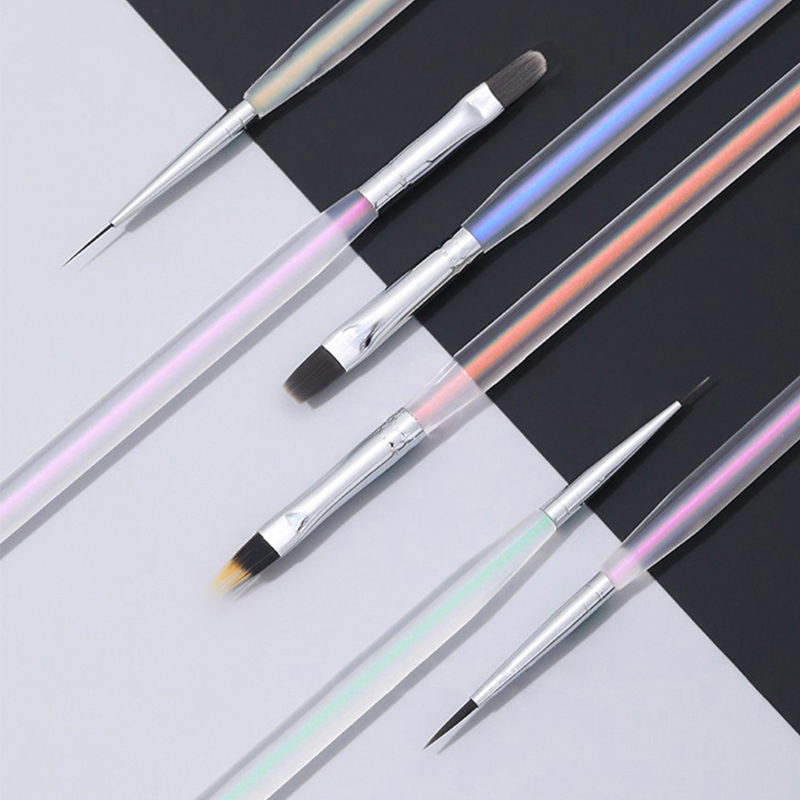
What Should Be Included in a Nail Brush Quality Agreement?
Quick Answer
A nail brush quality agreement should clearly define product specifications, bristle materials, brush dimensions, handle and ferrule requirements, logo and packaging standards, acceptable quality limits, inspection procedures, defect classification, corrective actions, and delivery requirements.
For nail salons, beauty brands, wholesalers, and importers purchasing nail brushes in bulk, a written quality agreement helps ensure consistent product performance across production batches. It also reduces misunderstandings between buyers and nail brush manufacturers regarding product quality, customization, and acceptance criteria.
Before placing a bulk order, buyers should confirm that the agreed quality standards apply to the approved sample, mass production, and final inspection.
Key Takeaways
- Define product specifications: Document brush type, bristle material, hair length, brush shape, handle dimensions, and ferrule specifications.
- Set measurable quality standards: Establish acceptable criteria for tip sharpness, spring, flexibility, liquid retention, shedding, and overall workmanship.
- Approve a reference sample: Use a signed or otherwise clearly identified pre-production sample as a reference for mass production.
- Specify inspection requirements: Agree on sampling methods, defect classifications, inspection stages, and acceptance criteria before manufacturing begins.
- Control private-label customization: Confirm logo artwork, printing or engraving methods, handle colors, ferrule finishes, caps, and packaging.
- Establish corrective actions: Define how defects will be reported, investigated, and resolved.
- Document delivery and traceability: Include production lead times, packaging requirements, batch identification, and documentation responsibilities.
A well-prepared quality agreement gives both the buyer and the nail brush supplier a shared standard for evaluating product quality before, during, and after production.
Table of Contents
- What Is a Nail Brush Quality Agreement?
- Why Do Buyers Need a Quality Agreement?
- Essential Elements of a Nail Brush Quality Agreement
- How to Define Nail Brush Quality Standards
- Sample Quality Agreement Checklist for Nail Brushes
- How to Inspect Nail Brushes Before Bulk Shipment
- Common Quality Problems and How to Prevent Them
- How to Choose a Reliable Nail Brush Manufacturer
- Frequently Asked Questions
- Conclusion
1. What Is a Nail Brush Quality Agreement?
A nail brush quality agreement is a written document that defines the product requirements, quality expectations, inspection procedures, and responsibilities agreed upon by a buyer and a supplier.
It is particularly important for B2B orders involving professional acrylic brushes, builder gel brushes, nail art liner brushes, French manicure brushes, and private-label nail brush sets.
Unlike a general purchase order, which primarily records quantities, prices, and delivery terms, a quality agreement focuses on what constitutes an acceptable product and how that quality will be verified.
For example, a beauty brand ordering 1,000 custom gel brushes may require consistent bristle softness, a stable brush tip, secure ferrule attachment, accurate logo placement, and protective caps. Without written standards, the buyer and manufacturer may have different interpretations of acceptable quality.
A quality agreement translates those expectations into specific requirements that can be checked during production and final inspection.
2. Why Do Buyers Need a Quality Agreement?
2.1 Maintain Consistent Quality Across Production Batches
A nail brush may look satisfactory in a sample but perform differently in mass production if materials, assembly methods, or quality checks are inconsistent.
A quality agreement helps the manufacturer maintain consistency in bristle shape, brush dimensions, handle finish, and functional performance.
2.2 Reduce Communication Problems
Terms such as “soft bristles,” “good spring,” and “sharp tip” can mean different things to different buyers.
A written agreement should explain how these qualities will be evaluated. Where possible, use measurable dimensions, approved reference samples, photographs, or documented test methods.
2.3 Protect Private-Label Brand Standards
For private-label nail brushes, small visual differences can affect brand consistency. Incorrect logo placement, color variations, scratches, or mismatched packaging may make products unsuitable for retail distribution.
Documenting branding requirements before production reduces these risks.
2.4 Establish Clear Inspection and Acceptance Rules
Buyers and suppliers should agree on what happens if an inspection identifies defects.
The agreement should explain the inspection method, defect classification, acceptance criteria, reporting process, and corrective-action procedure. This creates a more objective basis for resolving quality disputes.
3. Essential Elements of a Nail Brush Quality Agreement
The following sections should be considered when preparing a quality agreement for bulk nail brush orders.
3.1 Product Specifications
Start with a complete product specification sheet.
Include:
- Product name and model number
- Brush type and intended application
- Bristle material and grade
- Bristle length and diameter, where applicable
- Brush shape and tip profile
- Handle material, dimensions, and color
- Ferrule material, finish, and dimensions
- Total brush length
- Cap or protective cover requirements
- Approved drawings, photographs, and reference samples
For example, an acrylic nail brush specification might identify a No. 14 brush, the agreed bristle material, a specific hair length, a metal handle, and a defined brush-head shape.
Do not rely on the brush number alone. Numbering conventions and actual dimensions can vary between manufacturers, so critical measurements should be stated explicitly.
3.2 Bristle Material and Performance
Bristle selection is one of the most important factors affecting nail brush performance.
For acrylic nail brushes, buyers may specify natural Kolinsky hair, another agreed natural hair grade, or synthetic bristles. For gel brushes and nail art brushes, synthetic fibers are commonly selected according to the intended application.
The agreement should identify:
- The agreed bristle material and grade
- The approved bristle color and appearance, where relevant
- The required brush shape and tip sharpness
- The expected flexibility and spring-back
- The ability to retain and release the relevant liquid or product
- Acceptable shedding limits
- Any agreed performance tests
For acrylic brushes, the buyer may prioritize monomer retention, controlled bead formation, a stable point, and consistent spring.
For gel brushes, the focus may be on smooth gel application, suitable flexibility, controlled product distribution, and a tip that maintains its intended shape.
For fine-line brushes, buyers may require a narrow, precise tip with sufficient flexibility to create consistent lines.
Performance standards should be appropriate to the specific brush type rather than applying identical criteria to every product.
3.3 Handle and Ferrule Requirements
The handle and ferrule influence durability, appearance, balance, and ease of use.
Specify the following:
Handle requirements
- Material and dimensions
- Color and surface finish
- Weight or balance requirements, if important
- Resistance to scratches and visible defects
- Logo position and orientation
Ferrule requirements
- Material and finish
- Dimensions and shape
- Secure attachment to the handle
- Secure retention of the bristles
- Acceptable alignment and appearance
The agreement should prohibit loose ferrules, cracked handles, significant scratches, visible adhesive residue, and other defects that affect function or appearance.
If the brush uses a metal handle, buyers should also confirm the required surface finish and whether the handle must meet particular corrosion-resistance or cleaning requirements.
3.4 Logo and Private-Label Customization
For OEM and private-label projects, the quality agreement should include an approved branding specification.
Record:
- Final logo artwork and file version
- Logo dimensions and placement
- Printing, engraving, or other application method
- Logo color and orientation
- Handle and ferrule colors
- Packaging artwork and version
- Acceptable logo alignment and appearance
Approve a physical sample or production-equivalent branding sample before mass production.
If the order includes several brush styles, specify the branding requirements for each SKU separately. This reduces the risk of incorrect logos, mixed models, or inconsistent finishes within the same order.
3.5 Packaging and Labeling Standards
Packaging requirements should be documented as carefully as brush specifications.
Depending on the order, the agreement may include:
- Individual protective caps or sleeves
- Individual bags or retail boxes
- Brush sets and inserts
- Product labels and barcodes
- Carton quantities
- Inner carton and master carton dimensions
- Protective packing against deformation and transit damage
- Shipping marks and carton identification
For example, if each nail brush requires an individual cap, the agreement should state whether caps must remain attached during packing and how the brush tips should be protected.
For EU and US retail orders, buyers should identify any applicable labeling, packaging, or market-specific compliance requirements before production. These requirements depend on the product, its intended use, and the market in which it will be sold.
3.6 Quality Inspection Procedures
The agreement should identify when and how product quality will be checked.
A typical inspection plan includes three stages:
Incoming material inspection
Check the agreed bristle material, handles, ferrules, caps, and packaging components against the approved specifications.
In-process inspection
Monitor brush-head shaping, trimming, assembly, logo application, and other critical production steps.
Final inspection
Check finished products for appearance, dimensions, workmanship, function, labeling, and packaging before shipment.
For larger orders, buyers may request a documented sampling plan based on an agreed standard, such as ISO 2859-1, which addresses sampling procedures for inspection by attributes.
The agreement should identify the applicable edition, inspection level, lot definition, sample size, and acceptance numbers. Simply stating “AQL 2.5” is insufficient because the applicable sampling plan and defect categories also matter.
AQL is a sampling-plan parameter; it does not mean that the buyer is guaranteed to receive a batch with a specific maximum percentage of defects.
3.7 Defect Classification and Acceptance Criteria
A useful agreement distinguishes critical, major, and minor defects.
The parties should define each category according to the product’s intended use and risk.
| Defect category | Example nail brush defects | Typical treatment |
|---|---|---|
| Critical | A defect creating a serious safety risk or a prohibited material issue | Stop release and investigate immediately |
| Major | Loose ferrule, severely deformed tip, substantial shedding, or a brush that cannot perform its intended function | Reject or hold the affected lot according to the agreed criteria |
| Minor | Small cosmetic variation that does not materially affect function or agreed appearance | Evaluate against the agreed cosmetic acceptance criteria |
These are illustrative examples, not universal classifications. The buyer and supplier must agree on the final classification and acceptance limits.
The agreement should also explain whether defects are assessed individually or through a sampling plan and whether a failed lot can be reworked and reinspected.
3.8 Delivery, Traceability, and Documentation
Quality control does not end when the brushes pass final inspection.
The agreement should cover:
- Production and shipment deadlines
- Approved order quantities and SKU breakdowns
- Batch or lot identification
- Inspection records and reports
- Approved sample identification
- Packaging and shipping documentation
- Required product or material declarations
- Document retention periods, where agreed
Traceability makes it easier to investigate a quality issue if the buyer later identifies defects in a particular shipment.
3.9 Nonconformity and Corrective Actions
The agreement should define how both parties handle products that fail to meet the agreed requirements.
Include:
- How the buyer reports a suspected defect.
- What evidence is required, such as photographs, videos, samples, or inspection records.
- The time allowed for the supplier to acknowledge and investigate the issue.
- How the parties determine the cause and scope of the problem.
- What corrective or preventive action is required.
- How replacement, rework, credit, or other remedies will be agreed.
- Whether a corrective-action report is required.
For recurring issues, the supplier may be asked to provide a root-cause analysis and a corrective and preventive action plan (CAPA).
The agreement should specify reasonable deadlines and remedies rather than relying on vague promises to “solve the problem.”
3.10 Change Control and Approval
A manufacturer should not make an unapproved change to a critical product specification.
The agreement should identify which changes require prior written approval, including:
- Bristle material or grade
- Brush dimensions or shape
- Handle or ferrule material
- Surface finish or logo method
- Packaging components
- Manufacturing location, where relevant
- Critical production processes
If a change is necessary, the supplier should notify the buyer, explain its impact, and obtain approval before implementing it for the affected order.
This is particularly important for repeat orders and private-label products, where consistency with an established reference sample is essential.
4. How to Define Nail Brush Quality Standards
A quality agreement is most useful when its requirements can be objectively evaluated.
Consider the following examples.
| Quality attribute | What to specify | How to verify |
|---|---|---|
| Bristle length | Agreed measurement and tolerance | Measuring tool and approved drawing |
| Brush shape | Approved profile and dimensions | Visual comparison and measurement |
| Tip sharpness | Defined shape and functional expectation | Visual inspection and agreed application test |
| Spring-back | Expected recovery after controlled bending | Agreed functional test and reference sample |
| Shedding | Agreed acceptance limit or test method | Controlled inspection or handling test |
| Ferrule attachment | No unacceptable looseness or separation | Visual and agreed manual checks |
| Handle finish | Approved color, texture, and surface quality | Visual comparison under defined conditions |
| Logo placement | Approved position and orientation | Artwork and reference sample comparison |
| Packaging | Agreed quantity, labels, and protection | Packing inspection and carton verification |
Use Tolerances for Critical Dimensions
Instead of specifying only “12 mm hair length,” define the target measurement and an agreed tolerance.
For example, a buyer might specify a target bristle length of 12 mm with a tolerance of ±0.5 mm, if that tolerance is suitable for the particular brush design.
This is an illustrative specification, not a universal industry standard. The actual tolerance should be agreed with the manufacturer and validated against brush performance.
Use Approved Samples for Subjective Attributes
Some characteristics, such as softness, flexibility, and overall appearance, can be difficult to describe using numbers alone.
For these attributes, use an approved reference sample and, where possible, supplement it with a defined test method.
The reference sample should have a unique identification number, approval date, product model, and relevant specification version.
For repeat orders, confirm that both parties are using the same reference standard.
5. Sample Quality Agreement Checklist for Nail Brushes
The following checklist can be used when evaluating a nail brush manufacturer or preparing an OEM/ODM purchase order.
| Item | Requirement | Confirmed |
|---|---|---|
| 1 | Product model and brush type documented | Yes / No |
| 2 | Bristle material and grade confirmed | Yes / No |
| 3 | Brush dimensions and tolerances specified | Yes / No |
| 4 | Approved sample identified | Yes / No |
| 5 | Functional performance requirements defined | Yes / No |
| 6 | Handle and ferrule specifications confirmed | Yes / No |
| 7 | Logo artwork and placement approved | Yes / No |
| 8 | Packaging and labeling requirements documented | Yes / No |
| 9 | Inspection stages and sampling plan agreed | Yes / No |
| 10 | Critical, major, and minor defects defined | Yes / No |
| 11 | Lot acceptance criteria established | Yes / No |
| 12 | Corrective-action process documented | Yes / No |
| 13 | Delivery and traceability requirements confirmed | Yes / No |
| 14 | Change-control procedure agreed | Yes / No |
| 15 | Responsibilities and contractual remedies documented | Yes / No |
Before production starts, both parties should review the checklist and confirm that the relevant requirements are recorded in the purchase order, technical specification, quality agreement, or other contractually applicable documents.
This checklist is a starting point. It does not replace a product-specific agreement or legal review where required.
6. How to Inspect Nail Brushes Before Bulk Shipment
Even with a signed quality agreement, buyers should verify that the finished products meet the agreed specifications.
Step 1: Confirm Product Identity
Check model numbers, brush sizes, materials, logo versions, and quantities against the purchase order.
For multi-SKU orders, inspect each model separately.
Step 2: Conduct a Visual Inspection
Look for bent or uneven bristles, poorly formed tips, scratches, damaged handles, loose ferrules, excess adhesive, and incorrect logo placement.
Step 3: Test Functional Performance
Use the agreed test method for each brush type.
For acrylic brushes, this may include evaluating liquid retention, bead formation, tip stability, and control during application.
For gel brushes, it may include checking product distribution, smooth application, and brush-head recovery.
For liner brushes, it may include testing line consistency, tip precision, and control during use.
Functional tests should be repeatable and appropriate for the intended application.
Step 4: Check Packaging
Verify that individual caps, labels, retail packaging, carton quantities, and shipping marks match the approved packing specification.
Step 5: Record and Report Findings
Document the sample size, defects found, test results, and inspection decision.
If a lot fails the agreed criteria, follow the contractually established hold, rework, rejection, or corrective-action process.
Where independent inspection is required, arrange it before shipment and specify who bears the inspection costs.
7. Common Quality Problems and How to Prevent Them
Problem 1: The Mass-Production Brush Differs from the Sample
Possible causes: Unapproved material substitutions, inconsistent shaping, or insufficient process control.
Prevention: Identify the approved sample, document critical specifications, and require written approval for material or process changes.
Problem 2: The Brush Tip Is Not Sharp Enough
Possible causes: Inconsistent trimming, unsuitable bristle selection, or differences in brush-head shaping.
Prevention: Define the required tip profile, use reference samples, and include a functional test in the inspection plan.
Problem 3: Excessive Bristle Shedding
Possible causes: Inadequate bristle retention, assembly problems, or inconsistent manufacturing processes.
Prevention: Agree on an appropriate shedding test and acceptance limit, inspect assembly quality, and investigate recurring failures.
Problem 4: The Logo Is Incorrect or Poorly Applied
Possible causes: Outdated artwork, incorrect positioning, or inconsistent printing or engraving.
Prevention: Approve the final artwork and branding sample before production and include logo inspection in the final quality check.
Problem 5: Products Arrive with Damaged Tips or Packaging
Possible causes: Insufficient protective caps, unsuitable carton packing, or movement during transportation.
Prevention: Specify protective packaging, test the packing arrangement where appropriate, and document the responsibilities for transit damage.
A strong quality agreement addresses these risks before they become expensive problems.
8. How to Choose a Reliable Nail Brush Manufacturer
A reliable nail brush manufacturer should be able to explain how it converts your product requirements into repeatable production and inspection standards.
When evaluating potential suppliers, ask the following questions:
- Can you provide detailed specifications for each nail brush model?
- Can you produce samples that match the agreed bristle material, shape, and dimensions?
- How do you check bristle shedding, tip formation, and ferrule attachment?
- Do you have documented incoming, in-process, and final inspection procedures?
- Can you maintain consistent quality across repeat orders?
- How do you manage custom logos, handle colors, ferrule finishes, and packaging?
- Can you provide inspection records or other relevant quality documentation?
- What happens if a shipment fails the agreed acceptance criteria?
- How do you control changes to materials and production specifications?
Do not evaluate a supplier solely on the sample appearance or quoted unit price. Consider technical capability, communication, customization flexibility, quality-control procedures, production capacity, and the ability to maintain consistent specifications over time.
For buyers developing a new product line, it is often useful to begin with a clearly defined sample order before proceeding to mass production.
Looking for a nail brush manufacturer for your next private-label project? Compare suppliers based on product specifications, functional performance, customization capabilities, and documented quality-control procedures rather than price alone.
9. Frequently Asked Questions
What is a nail brush quality agreement?
A nail brush quality agreement is a document that defines the product specifications, quality standards, inspection procedures, acceptance criteria, and responsibilities agreed upon by a buyer and supplier.
Is a quality agreement necessary for small nail brush orders?
It is useful for both small and large orders, particularly when the products include custom materials, special brush shapes, private-label logos, or retail packaging. For smaller orders, the requirements may be documented in a simplified specification sheet and purchase order.
What quality standards should I check when buying nail brushes in bulk?
Key areas include bristle material, dimensions, tip shape, spring-back, shedding, ferrule attachment, handle finish, logo accuracy, and packaging. The exact requirements depend on the brush type and intended application.
Should I use AQL for nail brush inspection?
An agreed AQL-based sampling plan can help buyers and suppliers make consistent lot-acceptance decisions. However, the inspection level, lot size, sample size, defect classifications, and acceptance numbers must also be defined. AQL does not guarantee that every individual product is defect-free.
How can I ensure that bulk nail brushes match the approved sample?
Identify the approved sample, document critical dimensions and materials, establish inspection procedures, and require written approval for relevant changes. Functional and visual checks should be performed during production and before shipment.
What should I do if the delivered nail brushes do not meet the agreement?
Record the issue, identify the affected models and batches, collect inspection evidence, and notify the supplier according to the agreed procedure. The parties should investigate the cause and follow the contractually agreed remedies, which may include rework, replacement, credit, or other corrective actions.
Does a quality agreement guarantee that nail brushes meet EU or US requirements?
No. A quality agreement helps control product consistency, but it does not automatically establish legal or regulatory compliance. Buyers should identify the applicable requirements for the product, its intended use, its materials, and the destination market, then obtain the necessary evidence and documentation.
10. Conclusion
A nail brush quality agreement is an important tool for buyers who want consistent product quality, reliable delivery, and fewer disputes with manufacturers.
The most effective agreements go beyond general descriptions such as “premium quality” or “professional grade.” They specify materials, dimensions, functional performance, customization requirements, inspection methods, defect classifications, and corrective-action procedures.
For beauty brands, wholesalers, importers, and private-label sellers, agreeing on these requirements before mass production helps establish clear expectations and supports more reliable supplier relationships.
At Yana Cosmetic, we understand that nail brush quality involves more than appearance. Bristle performance, brush-head consistency, handle workmanship, branding accuracy, and protective packaging all contribute to the finished product.
If you are sourcing custom nail brushes, acrylic brushes, gel brushes, liner brushes, or private-label nail brush sets, contact Yana Cosmetic to discuss your specifications, sample requirements, customization options, and quality expectations before placing your bulk order.
A clearly defined specification is the first step toward a more consistent nail brush product.
Internal link: How Bristle Length Affects Nail Brush Performance